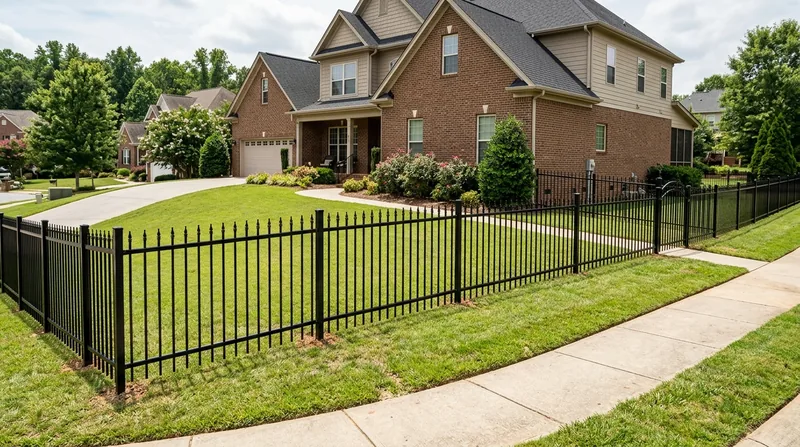



Aluminum fence installation in Charlotte gives you a low-maintenance perimeter that holds its finish through humid summers and clay-heavy soil conditions. Unlike wood, which rots at the ground line in our wet piedmont clay, or steel, which rusts without constant care, aluminum keeps its powder-coat appearance for years with nothing more than an occasional rinse. Our crews install aluminum and ornamental iron fence panels racked to follow your lot's slope, set posts deep enough to handle the clay's seasonal swelling, and brace gates to prevent sag on the sloped terrain common across Charlotte, Pineville, Matthews, and the surrounding suburbs. Whether you're building a new property line or replacing a failing wood fence, aluminum and ornamental metal deliver the look and durability that match the investment.
Why Aluminum and Ornamental Iron Fencing Matter in Charlotte's Piedmont Climate
Charlotte's humidity and red clay create a harsh environment for wood and untreated steel. Aluminum resists rust and corrosion without paint touch-ups, and ornamental iron fence systems with proper powder coating perform just as well. The real advantage on our sloped lots is the ability to rack panels (angle them to follow the grade) or step them, keeping the fence line clean and the posts set vertically in concrete where they belong. Posts that sit wet in clay will fail at the ground line within five to seven years if they're not set deep enough; aluminum's light weight lets us dig deeper without the labor cost that makes wood replacement expensive.
- Aluminum panels maintain their powder-coat finish without repainting, saving time and expense across Charlotte's humid growing season.
- Ornamental iron and steel fencing, when properly coated, deliver a traditional or contemporary look that wood cannot match and lasts decades longer.
- Our posts are set in concrete 30 to 36 inches deep to handle the clay's movement and freeze-thaw cycles, preventing the ground-line rot that ends wood fences early.
- Racked and stepped installation options follow Charlotte's rolling terrain, keeping fence lines straight and gates operating smoothly on slopes up to 15 degrees.
- Aluminum weighs one-third what steel does, reducing installation labor and allowing us to set deeper, more stable posts without additional cost.
These advantages add up to a fence that outlasts the Charlotte home it protects.
Key info: North Carolina building departments and many HOAs in master-planned communities (especially in Huntersville, Cornelius, and Matthews subdivisions) set height limits at 4 to 6 feet and may restrict material or color. Check your local code and deed restrictions before ordering panels. We work from your existing survey and install on the line you identify; a licensed land surveyor determines your actual property boundary.
For detailed permit requirements in your jurisdiction, contact your local Charlotte-area building department or review the City of Charlotte's building and zoning resources.
How We Install Aluminum and Ornamental Iron Fence in Charlotte
Installation starts with a site walk and a call to 811 for a free utility locate (required by North Carolina law before any digging). We mark the fence line, mark utilities, and then set posts at intervals that match the panel width, usually 6 feet on center. Posts go into the ground 30 to 36 inches and are set in concrete; the concrete cures for 24 hours before panels are hung. On sloped lots, we rack the panels to follow the grade smoothly, or step them if the slope is steep. Gates are braced with anti-sag hardware and hung on hinges rated for the weight and the climate. Metal fence installation in Charlotte's humidity demands attention to fastener type (stainless or galvanized) and coating integrity; we use powder-coated hardware throughout to prevent rust staining on panels.
- We call 811 for a free utility locate and wait for the marks before digging any post holes, protecting underground lines and keeping the job legal.
- Posts are dug 30 to 36 inches deep, set in concrete, and checked for plumb before the concrete cures, ensuring a straight fence line on our rolling terrain.
- Panels are racked (angled to follow the slope) or stepped (dropped in height as the grade rises), depending on your preference and the steepness of your lot.
- Gates receive anti-sag bracing and hinges rated for Charlotte's humidity and seasonal movement, so they swing freely year after year.
- All fasteners are stainless steel or galvanized, and hardware is powder-coated to match the finish and resist rust bleeding onto the panels.
This method keeps your fence plumb, your gates operating smoothly, and your posts standing for decades, even on the sloped lots that are standard across Charlotte's subdivisions.
Example: A Mint Hill homeowner on a lot sloping 8 degrees had a wood fence that sagged and rotted at the posts within six years. We installed an aluminum fence racked to the slope, set posts 36 inches deep in concrete, and added anti-sag bracing to the gate. Five years later, the fence is straight, the gate swings freely, and there's no rust or finish breakdown. The investment paid for itself in avoided repairs.
For details on our gate installation and repair services, visit our gate installation page.
Aluminum vs. Ornamental Iron: Installation and Maintenance Comparison
| Approach | Description | Best for |
|---|---|---|
| Aluminum Panels | Lightweight, pre-assembled, powder-coated in factory. Posts and rails are hollow aluminum. No rust, minimal maintenance. Available in traditional and modern profiles. | Homeowners seeking durability with zero-maintenance finish. Residential subdivisions where weight and ease of installation matter. Budget-conscious projects that still demand longevity. |
| Wrought Iron Fence Installation | Hand-forged or welded steel components. Ornamental designs with scrollwork, finials, and custom details. Powder-coated finish. Heavier, requires skilled installation and periodic touch-up painting if the coating is damaged. | Heritage properties, formal estates, and homeowners prioritizing design and presence over maintenance minimalism. Projects where custom metalwork adds property value and curb appeal. |
| Steel Fence Installation | Solid steel posts and rails, powder-coated. Stronger than aluminum, heavier, and more expensive. Requires careful attention to coating integrity to prevent rust. Common in commercial and high-security applications. | Commercial properties, high-traffic residential areas, and projects where maximum strength and security are the priority. Homeowners willing to invest in durability and appearance. |
| Ornamental Metal Fencing (Mixed) | Combination of aluminum posts with wrought iron or steel panels, or vice versa. Balances weight, cost, design, and maintenance. Custom heights and profiles. Powder-coated throughout. | Homeowners seeking design flexibility without the full cost of solid wrought iron. Properties where traditional appearance and modern durability must coexist. Sloped lots where lighter posts ease deep setting. |
Each option is set in concrete 30 to 36 inches deep and braced for Charlotte's terrain and climate. The choice depends on your aesthetic priority, maintenance tolerance, and budget.
Aluminum & Ornamental Iron Fencing Cost in Charlotte: What to Expect
Aluminum fence panels start at around $44 per linear foot installed, including posts set in concrete and basic hardware. Ornamental iron and wrought iron fencing typically run $55 to $85 per linear foot, depending on the complexity of the design, the height, and whether custom metalwork is involved. A 150-foot aluminum fence on a level lot might cost $6,600 to $7,500; the same footage in ornamental iron could run $8,250 to $12,750. On sloped lots, racking or stepping adds labor but not material cost. Gates, anti-sag bracing, and custom finishes push the total higher. The biggest variable is site access: if our crew can drive close to the fence line and the ground is firm, costs stay lower; if we're hand-carrying panels through a narrow gate or digging in saturated clay, labor increases.
We recommend getting two to three estimates from contractors who will walk your property, discuss racking versus stepping, and explain the difference between aluminum and ornamental options before quoting. Many homeowners find that aluminum's zero-maintenance finish justifies a slightly higher upfront cost compared to wood, which will need staining or replacement within five to ten years. For a detailed breakdown of pricing by service and material, visit our pricing page.
Aluminum & Ornamental Iron Fencing Near Me: What Charlotte Homeowners Should Know When Hiring
When you're looking for a fence contractor in Charlotte, Pineville, Matthews, or the surrounding areas, start by verifying insurance (ask for a certificate of liability) and checking references from recent jobs in your neighborhood. A reputable contractor will explain whether your project needs a permit (requirements vary across Charlotte's jurisdictions), will call 811 before digging, and will discuss HOA architectural standards if you're in a master-planned community. Ask how they handle post setting: concrete is non-negotiable in our clay soil; tamping alone will fail. Ask about racking versus stepping on a sloped lot, and ask for a timeline. Spring and early summer are the peak installation window; if you need work done in winter or late summer, expect a longer wait or a tighter schedule.
- Request a free, no-obligation estimate and ask the contractor to walk your property and explain the fence line, setbacks, and any visible utilities.
- Check references from jobs completed in the last two years, and ask specifically about post stability and gate operation on sloped lots.
- Verify insurance and ask whether the contractor is familiar with local permit requirements; some Charlotte jurisdictions require permits, others do not.
- Confirm that posts will be set in concrete at least 30 inches deep, not tamped or set in gravel, which fails in our clay soil.
- Discuss your timeline; spring and early summer are peak season, so book early if you need spring installation.
- Ask about warranty: aluminum panels are typically warrantied for 10 to 15 years, and ornamental iron for the same if the powder coat remains intact.
Charlotte Fence Contractors has been serving the area since 2009 and is an AFA Member Installer with the American Fence Association. We're fully insured and handle projects from residential privacy fencing to ornamental metal gates. Call us at (980) 208-1290 for a free estimate, or visit our contact page to request a callback.
Aluminum & Ornamental Iron Fencing in Charlotte: Pricing Guide
| Service | Price | Details |
|---|---|---|
| Aluminum Fence Installation | Starting at $44/ft | Includes posts set 30 to 36 inches deep in concrete, panels, rails, basic hardware, and labor on level to gently sloped lots |
| Ornamental Iron or Wrought Iron Fence | Starting at $55/ft | Includes custom or semi-custom designs, heavier gauge steel, powder-coated finish, posts set in concrete, and anti-sag bracing on gates |
| Racked or Stepped Installation on Slopes | Included in linear foot rate | No upcharge for racking panels to follow the slope or stepping height as grade rises; labor is built into the estimate |
| Gates and Anti-Sag Hardware | $400 to $1,200 per gate | Depends on gate width, material, hinges, and bracing; ornamental gates with custom designs cost more than standard aluminum gates |
| Free Estimate and Site Walk | Free | Response within 24 hours at (980) 208-1290; we discuss fence line, slope, utilities, permits, and HOA requirements before quoting |
Indicative pricing, the exact cost depends on square footage, finish, and site access. Free personalized estimate within 24h at (980) 208-1290.


