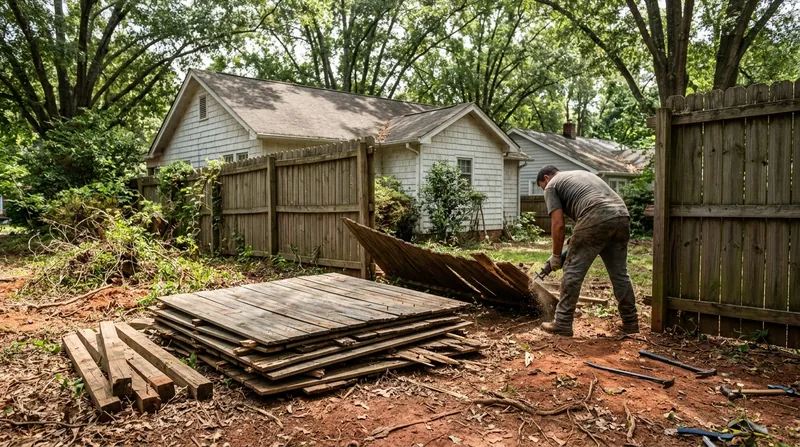




A fence replacement in Charlotte is often the most practical choice when posts rot at the ground line, panels warp beyond repair, or a storm leaves sections leaning. Charlotte's Piedmont clay holds water, drains slowly, and sits wet around post bases for weeks after heavy rain, so untreated wood fails faster here than in drier climates. We remove old fence lines completely, haul everything off your property, and set new posts in concrete on solid footing that handles the local soil and weather. Whether you're replacing a tired wood fence with fresh pressure-treated pine, upgrading to vinyl, or installing chain link, the job starts with a clean removal and ends with a line that will hold for years.
Why Fence Replacement and Removal Matters in Charlotte's Mill Villages and Subdivisions
Charlotte's older neighborhoods, from the mill villages near Kannapolis and Concord to in-town areas like South End and Plaza Midwood, are full of wood fences installed 15 to 25 years ago. The posts were set in tamped clay or shallow concrete, and the constant moisture cycle has rotted them at or below grade. In newer master-planned subdivisions across Matthews, Mint Hill, and Huntersville, HOA architectural standards govern fence height, material, and color, so a full replacement often requires approval and adherence to strict guidelines. When a fence reaches the end of its life, removing it cleanly and installing a code-compliant replacement protects your investment and keeps your property in line with local rules.
- Rotted posts at ground line cannot be repaired and require full panel and post replacement to restore the fence line.
- Leaning or unstable sections from frost heave, settling, or wind damage are safer and more economical to replace than to prop up with bracing.
- Upgrading from wood to vinyl or chain link eliminates rotting and reduces maintenance, which pays back the upfront cost over time.
- Removal and disposal of old fence material is included in our replacement pricing, so you do not pay extra for hauling.
- We verify HOA architectural standards and local setback rules before we quote, so there are no surprises at permit time.
A complete removal and reinstall also gives you a chance to adjust fence line placement, add gates, or install automatic driveway gates if your property layout has changed.
Local example: A wood fence in a Pineville subdivision built in 1998 typically shows rot at the post base by 2015 to 2018, especially on the side facing the afternoon sun and after wet winters. Homeowners often delay replacement, hoping to patch the worst sections, but once posts fail below grade, the whole line becomes unstable. We pull it, haul it, and set new posts 3 feet deep in concrete, which handles the clay and keeps the fence solid for 20+ years.
For guidance on fence regulations and permit requirements in your area, consult the City of Charlotte Planning & Development Department or your local county building office, as rules vary across Greater Charlotte.
How We Remove and Replace Fence Lines: Step by Step
Our process starts with a site walk to identify the existing fence line, check for utility lines, and assess soil conditions. We call 811 for a utility locate before we dig any post holes, which is required by North Carolina law and protects you from hitting underground electric, gas, or water lines. Once the line is marked and clear, we remove the old fence section by section, cut it into manageable pieces, and haul everything to our truck. Then we set new posts 3 feet deep in concrete, space them 6 feet apart for standard panels, and install new rails, pickets, or mesh depending on your choice of material.
- We verify the fence line against your existing survey or the boundary you identify, and we mark the line with chalk before we remove anything.
- Posts are set in concrete to a depth of 3 feet, which keeps them above the water table and prevents frost heave in winter.
- We install pressure-treated pine, cedar, vinyl, or chain link panels according to your choice and local code requirements.
- For sloped lots, we rack or step the fence as needed to keep it level and secure along the grade.
- All debris is hauled off the same day, leaving your yard clean and ready for the new fence to be stained, sealed, or finished.
On racked or stepped installations on sloped terrain, the decision is made on site based on grade and your preference. We explain the visual and functional trade-offs so you choose the right method for your lot.
Example job: A property in Davidson with a 1-acre lot on a slope had a 150-linear-foot fence line running along the property edge. The old wood fence was racked (angled at the bottom to follow the slope), but the posts had rotted and the top rail was sagging. We removed the entire line, called 811, set new posts 3 feet deep in concrete on 6-foot centers, and installed new pressure-treated pine panels racked to match the slope. The job took 2 days and cost $4,200 for materials and labor.
If you are replacing an older fence and want to explore fence repair for a few isolated sections first, we can assess which boards or posts are salvageable and which need to come out.
| Approach | Description | Best for |
|---|---|---|
| Complete removal and reinstall with new posts | Old fence is removed completely, posts are set 3 feet deep in concrete, and new panels are installed on the same line or a slightly adjusted line. | Rotted posts, leaning sections, or upgrades in material (wood to vinyl, wood to chain link). |
| Partial replacement with existing posts | Old panels are removed, posts are inspected and reused if sound, and new rails and pickets or mesh are installed on the existing post line. | Posts are still solid and level, but panels have warped, split, or failed from age or weather. |
| Racked installation on slope | Posts and panels are angled at the bottom to follow a sloped lot, so the top of the fence remains level and the bottom follows grade. | Lots with moderate to steep slopes where a stepped fence would create gaps or look uneven. |
| Stepped installation on slope | Posts are plumb (vertical), and panels are installed in horizontal steps that drop as the grade drops, creating a staircase effect along the slope. | Steep slopes where racking would be extreme, or where the homeowner prefers a clean, level appearance in each section. |
Fence Replacement and Removal Cost in Charlotte: What to Expect
A fence replacement cost in Charlotte depends on the linear footage, the material you choose (pressure-treated pine, cedar, vinyl, or chain link), site access, and soil conditions. A basic wood fence replacement typically starts at $2,500 for a short section of 30 to 50 linear feet, but most residential jobs run between $3,500 and $7,500 for a full property perimeter. Vinyl and ornamental metal cost more upfront but require less maintenance. Chain link is the most economical option and is popular for side yards and utility areas. Sloped lots, racked installations, and difficult soil conditions may add to the labor, and we let you know the exact figure before we start.
- Material choice is the largest cost driver: pressure-treated pine is the most affordable; cedar and vinyl cost 30 to 50 percent more.
- Linear footage is measured along the fence line, and post spacing affects the total number of posts and the final price.
- Site access, soil type, and slope determine labor time; clay that must be broken up or a steep grade adds cost compared to level, sandy soil.
- Removal and disposal of the old fence is included in our quote, so there is no hidden hauling fee.
- We provide a free estimate within 24 hours and explain every line item so you understand where your money goes.
Most homeowners get 2 to 3 estimates before deciding, and we encourage that. Our pricing is transparent, and our crew does the work themselves rather than subcontracting, so you know who is on your property and how the job will be done.
For a detailed breakdown of pricing by material and job size, visit our full pricing page. Call us at (980) 208-1290 for a free, no-obligation estimate on your specific fence line.
Fence Replacement and Removal Near Me: What to Look for When Hiring a Contractor in Charlotte
When you search for a fence contractor near you in Charlotte, look beyond the lowest price. A reputable contractor will show up on time, provide a detailed written estimate, answer your questions about materials and techniques, and carry full insurance coverage. Check references from recent jobs in your neighborhood, ask about HOA approval processes if you live in a master-planned community, and verify that the contractor understands local setback rules and permit requirements. We have been in business since 2009 and are an AFA Member Installer with the American Fence Association, which means we follow industry standards for post depth, spacing, and material quality.
- Ask for references from homeowners in your area and call at least two to ask about the quality of work and whether the crew cleaned up afterward.
- Request a written estimate that lists material, labor, post depth, and any additional costs so there are no surprises when the invoice arrives.
- Verify that your contractor will call 811 for utility locates before digging and that they understand North Carolina law on this requirement.
- If you live in an HOA community, confirm that your contractor can help navigate architectural approval and knows the height and material restrictions that apply to your neighborhood.
- Check that the contractor is fully insured and can provide a certificate of insurance on request, which protects you if someone is injured on your property during the work.
We work across Greater Charlotte, from Concord and Kannapolis to the north, through Matthews and Mint Hill to the east, and into Pineville and Weddington to the south. If you are ready to move forward, contact us for a free estimate or call (980) 208-1290. We respond within 24 hours and can typically schedule work within 2 to 4 weeks depending on the season.
Fence Replacement & Removal in Charlotte: Pricing Guide
| Service | Price | Details |
|---|---|---|
| Wood fence replacement, 50 linear feet | Starting at $2,500 | Pressure-treated pine panels, posts set 3 feet deep in concrete, removal and hauling included, level or racked installation |
| Vinyl or chain link replacement, 75 to 100 linear feet | Starting at $4,200 | Vinyl or galvanized chain link panels, new posts set in concrete, complete removal of old fence, includes gate opening if needed |
| Full property perimeter replacement, 150 to 200 linear feet | Starting at $6,500 | Pressure-treated pine, cedar, or vinyl, posts 6 feet on center, 3 feet deep in concrete, sloped or stepped installation on uneven terrain |
| Complex or large-scale replacement, 200+ linear feet or multiple materials | On estimate | Steep slopes, difficult soil, ornamental metal, or combination of materials requires on-site assessment before price is confirmed |
| Travel and site visit | Included | No separate charge for travel within Charlotte and surrounding service areas; estimate provided within 24 hours at no cost |
| Free estimate | No obligation | Call (980) 208-1290 or request online; we walk the property, explain options, and provide a detailed written quote before you decide |
Indicative pricing, the exact cost depends on square footage, finish, and site access. Free personalized estimate within 24h at (980) 208-1290.


