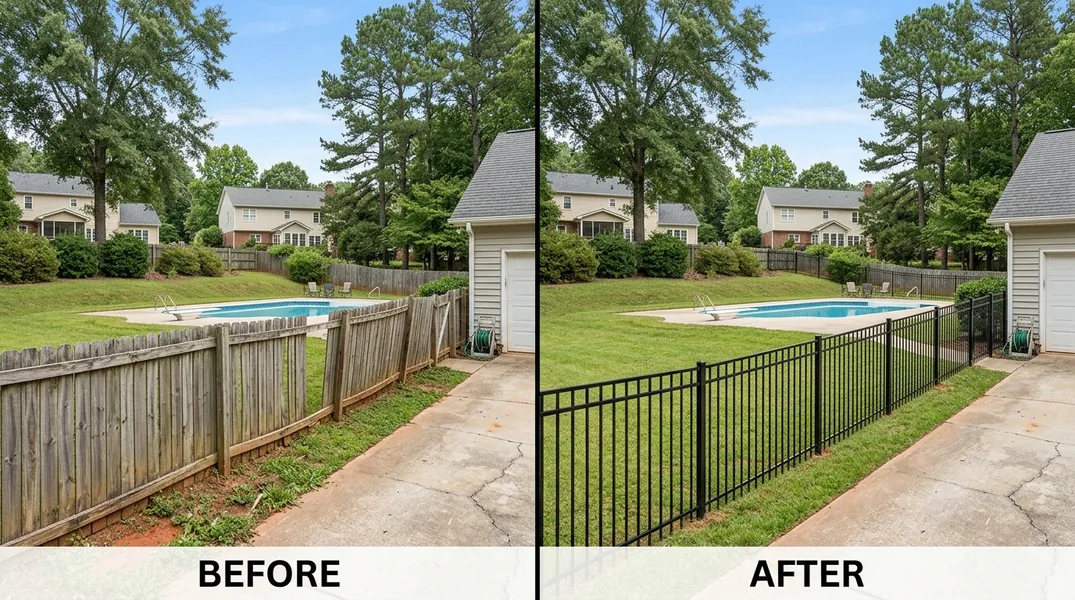
Understanding Fence Responsibility in HOA Communities
Moving into a newer HOA subdivision in Indian Trail or Waxhaw comes with unique considerations when it comes to fencing. One of the most common questions homeowners ask is: who pays for fence between neighbors? The answer depends largely on your HOA's covenants, conditions, and restrictions (CC&Rs), as well as local property law in North Carolina.
In many HOA communities, the association itself maintains common area fences, but boundary fences between individual lots often fall to the property owners. Before you install any fence, review your HOA documentation carefully. Some subdivisions have specific guidelines about fence materials, height, and placement. Others may require approval from an architectural review board before you proceed. Understanding these rules upfront saves time, money, and potential disputes with your neighbors and the HOA.
North Carolina property law generally follows the principle that a fence on property line is a shared responsibility, though this can vary based on your deed and local ordinances. In Charlotte and surrounding areas like Indian Trail and Waxhaw, it's common for neighbors to split the cost of a boundary fence, but this should be discussed and agreed upon before installation begins.
Who Pays for the Fence: Legal Considerations
The question of who pays for fence between neighbors doesn't have a one-size-fits-all answer. In North Carolina, there is no automatic legal obligation for one neighbor to pay for a fence that benefits both properties. However, if both neighbors agree that a fence is needed, they can enter into an agreement to share the cost. This agreement should be documented in writing to prevent future misunderstandings.
If one neighbor wants a fence and the other doesn't, the neighbor who wants it typically bears the full cost. This is an important distinction in newer HOA subdivisions, where community standards may encourage fencing for aesthetic or security reasons. Before investing in Wood & Privacy Fence Installation, confirm with your neighbor whether they're willing to share costs. A written agreement protects both parties and clarifies expectations about maintenance responsibilities going forward.
Additionally, check with your HOA about whether the association has any policies regarding cost-sharing for boundary fences. Some subdivisions in the Indian Trail and Waxhaw area have specific provisions that address this issue. Having these conversations early prevents costly disputes and ensures a smooth installation process.
Navigating Neighbor Fence Law in North Carolina
North Carolina's neighbor fence law is relatively straightforward but often misunderstood by homeowners. The state does not have a statute requiring neighbors to share the cost of a fence, which means the burden falls on the property owner who initiates the project. However, once a fence is built on or near a property line, both neighbors have certain rights and responsibilities regarding its maintenance and use.
In newer HOA subdivisions, the situation becomes more complex because the HOA may have its own rules about fencing. These rules often supersede general state law within the community. For example, your HOA might require that all fences be a certain material, color, or height, or that they be set back a specific distance from the property line. Violating these rules can result in fines or mandatory removal of the fence. Before you contact a fence contractor, obtain a copy of your HOA's architectural guidelines and review them thoroughly.
Another important consideration is easements and utility lines. Your property may have easements that restrict where you can place a fence. Underground utilities like water, sewer, electric, and gas lines may also limit your fence placement. A professional fence installer can help identify these issues, but it's your responsibility to verify property lines and easements before installation. Contact your local county assessor's office or review your property deed for this information.
The Good Neighbor Fence: Best Practices for Shared Boundaries
A good neighbor fence is one that's installed with clear communication, written agreements, and mutual respect. In Indian Trail and Waxhaw subdivisions, this approach prevents costly disputes and maintains community harmony. Before you break ground, sit down with your neighbor and discuss the project in detail. Talk about the fence style, materials, height, and who will be responsible for maintenance and repairs.
If both neighbors agree to share the cost, put the agreement in writing. Specify what each party will pay, who will hire the contractor, and how ongoing maintenance will be handled. Will the cost be split 50/50, or will each neighbor pay for the side of the fence that faces their property? These details matter and should be documented before work begins. Once you've reached an agreement, you can confidently move forward with hiring a professional installer.
When selecting a fence style for a shared boundary, consider materials that complement both properties and the neighborhood aesthetic. Vinyl & PVC Fence Installation offers low-maintenance durability, while Wood & Privacy Fence Installation provides a classic look that works well in newer subdivisions. The right choice depends on your budget, maintenance preferences, and HOA guidelines. Charlotte Fence Contractors can help you explore options and find a style that works for both neighbors.
Wood & Privacy Fence Installation Near Me: When to Call a Professional
Once you've navigated the legal and financial aspects of fencing, it's time to find a qualified contractor. If you're in Indian Trail, Waxhaw, or the greater Charlotte area, working with a local fence company that understands HOA requirements and North Carolina property law is essential. A professional installer ensures your fence meets all codes, is properly positioned on the property line, and is built to last.
When you contact a contractor for a Wood & Privacy Fence Installation, ask about their experience with HOA subdivisions. Do they have references from other homeowners in Indian Trail or Waxhaw? Can they help you navigate HOA approval processes? A reputable contractor will also verify property lines, identify utility easements, and ensure the fence is installed correctly. Charlotte Fence Contractors serves the entire Charlotte area and has extensive experience with HOA communities. Call (980) 208-1290 to discuss your project and get a free estimate.
Before hiring, ask the contractor to explain the installation timeline, warranty coverage, and any permits required by your local jurisdiction. In many HOA subdivisions, permits are handled by the association or the county, and your contractor should be familiar with these processes. A transparent contractor will provide a detailed written quote and timeline, answer all your questions, and keep you informed throughout the project.
Wood & Privacy Fence Installation Cost in Charlotte: What to Budget
The cost of fencing varies widely based on materials, length, and local labor rates. Wood & Privacy Fence Installation typically ranges from $25 to $50 per linear foot in the Charlotte area, while Vinyl & PVC Fence Installation may cost between $30 and $60 per linear foot. These prices are estimates and can fluctuate based on site conditions, materials selected, and local market conditions. If you're sharing costs with a neighbor, you'll split these expenses, making the project more affordable for both parties.
When budgeting for your fence, factor in additional costs such as permits, site preparation, and removal of old fencing if applicable. Some HOA subdivisions may also require professional surveys to verify property lines, which adds to the overall cost. To get an accurate picture of what your project will cost, request detailed pricing from multiple contractors. Charlotte Fence Contractors provides transparent quotes and can explain what's included in the price.
Don't make your decision based on price alone. The cheapest option may not be the best value if the contractor cuts corners on quality or doesn't follow HOA guidelines. Invest in a reputable contractor who understands your community's requirements and delivers quality workmanship. Contact Charlotte Fence Contractors at (980) 208-1290 or visit our website to request a free estimate and learn more about our services and pricing options.
Looking for a professional tree service in Charlotte? Charlotte Fence Contractors responds fast for all your fence needs.
Get a Free Quote