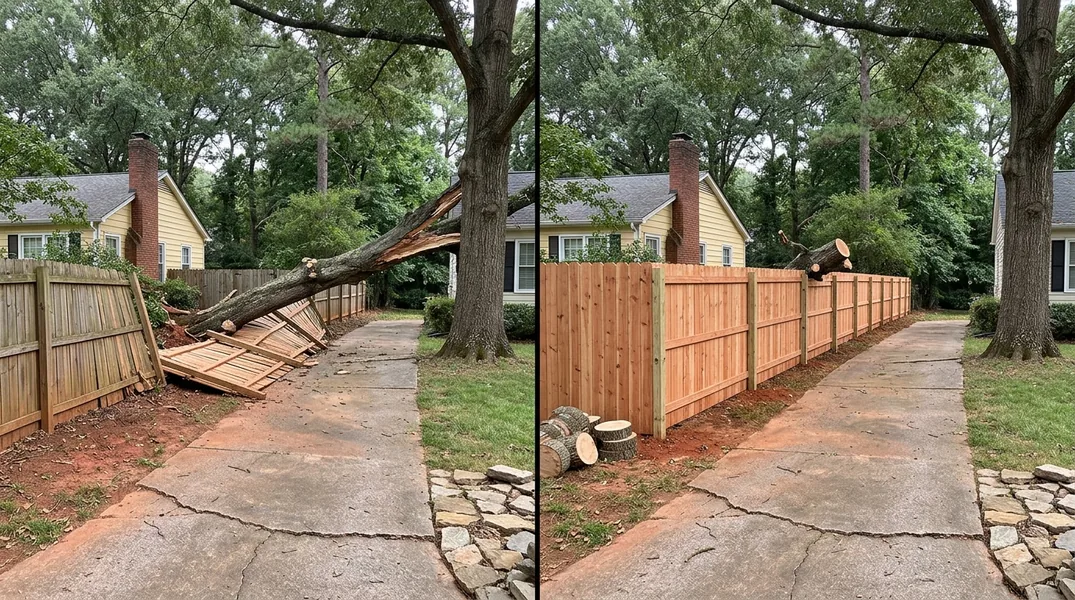
Winter Weather and Fence Damage in Mecklenburg County
Homeowners across Charlotte and Mecklenburg County know that winter brings more than just cold temperatures. Ice storms, heavy snow, and falling tree limbs create a perfect storm of conditions that can compromise the integrity of residential fences. When temperatures drop below freezing, moisture trapped in wood expands, causing stress fractures and warping. Add the weight of accumulated ice and the impact of falling oak limbs, and suddenly your fence becomes vulnerable to serious damage.
The challenge intensifies when you consider that many homeowners don't realize damage has occurred until spring arrives. By then, rotted posts, split boards, and leaning sections may have already compromised your property line and security. Understanding these seasonal threats allows you to take proactive steps to protect your investment before the next winter storm arrives.
How Ice Storms Impact Wood and Privacy Fences
Wood & Privacy Fence Installation remains one of the most popular fencing choices in the Charlotte area, but wood's natural vulnerability to ice and moisture is a real concern. When an ice storm coats your fence, the accumulated weight can stress fence posts and panels in ways they weren't designed to handle. The weight of ice buildup, combined with wind pressure, creates lateral forces that push against fence boards and weaken the connections at posts.
Beyond the immediate weight, the freeze-thaw cycle that follows ice storms causes repeated expansion and contraction in wooden fence materials. This constant movement weakens fasteners, opens gaps between boards, and can eventually lead to post failure. If your fence has any existing moisture damage or if posts weren't set deep enough during installation, ice storm damage becomes exponentially worse. The key to minimizing this damage is ensuring your fence was built to proper specifications and that you maintain it regularly throughout the year.
Oak Limbs and Falling Trees: The Hidden Threat
Mecklenburg County's mature oak trees add character to our neighborhoods, but they also pose a significant risk to fences during winter weather. Wet, heavy snow and ice accumulation on oak limbs creates dangerous conditions where branches become overloaded and snap. A falling oak limb can strike a fence with tremendous force, splintering boards, cracking posts, or even knocking sections completely flat. The damage happens in seconds, but the repair costs and structural compromise can last for years if not addressed promptly.
What makes oak limb damage particularly troublesome is that it often goes beyond cosmetic issues. A fallen limb may crack a post at its base, compromising the structural support of your entire fence line. Even if the visible damage seems minor, the underlying structural integrity may be severely compromised. This is why it's essential to inspect your fence after any significant winter weather event and to have damaged sections evaluated by experienced professionals who can determine whether repair or replacement is necessary.
Preventive Maintenance and Winterization Strategies
The best defense against winter fence damage is a comprehensive preventive maintenance plan. Before the cold season arrives, inspect your entire fence line for weak spots, rotting wood, loose fasteners, and areas where posts may be leaning. If you have trees near your fence, consider having a certified arborist evaluate whether any branches pose a risk during heavy snow or ice conditions. Removing or trimming problem branches before winter arrives can prevent catastrophic damage during the season.
For wooden fences specifically, applying a quality sealant or stain before winter helps protect the wood from moisture infiltration. This barrier reduces the amount of water the wood absorbs, which in turn minimizes the expansion and contraction that occurs during freeze-thaw cycles. Additionally, ensure that your fence posts are properly set below the frost line, which in Mecklenburg County is typically around 12 to 18 inches deep. Shallow post installation is a common problem that makes fences far more vulnerable to winter damage. If you're unsure about your fence's condition or installation quality, contacting Charlotte Fence Contractors at (980) 208-1290 for a professional assessment is a smart investment.
Choosing Durable Fencing Materials for Winter Resilience
While Wood & Privacy Fence Installation remains popular, homeowners should understand that other materials handle winter weather differently. Vinyl & PVC Fence Installation offers superior resistance to freeze-thaw cycles because vinyl doesn't absorb moisture and doesn't rot. Vinyl remains flexible even in cold temperatures, allowing it to move slightly under stress rather than cracking or breaking. For homeowners in Matthews, Pineville, and surrounding areas, vinyl represents an excellent investment if winter weather resistance is a priority.
Aluminum & Ornamental Iron Fencing also performs well during ice storms since metal doesn't absorb water and won't rot or warp. However, metal fencing requires proper installation and occasional maintenance to prevent rust and corrosion. Chain Link Fence Installation offers another practical option, though it provides less privacy than wood or vinyl alternatives. The material choice ultimately depends on your priorities regarding aesthetics, privacy, durability, and budget. Getting a free estimate from Charlotte Fence Contractors allows you to explore which material best suits your needs and local climate challenges.
What to Do After Winter Storm Damage
If your fence has already sustained damage from ice storms or falling limbs, prompt action is essential. Temporary damage can quickly become permanent structural problems if left unaddressed. Begin by documenting the damage with photographs, as this information may be useful for insurance claims. Next, assess whether the damage poses a safety risk to your family, pets, or neighbors. Leaning sections or loose boards should be secured or cordoned off until repairs can be made.
Don't attempt major repairs yourself if you're uncertain about structural integrity. A professional fence contractor can evaluate the damage, determine whether sections can be repaired or must be replaced, and ensure that repairs meet local building codes. Charlotte Fence Contractors serves homeowners throughout the region and can provide expert assessment and restoration services. Whether your fence needs minor repairs or complete replacement, calling (980) 208-1290 to discuss your situation ensures you get professional guidance tailored to your specific damage and fence type. With winter weather remaining unpredictable, having a trusted contractor ready to help provides peace of mind for Charlotte homeowners.
Looking for a professional tree service in Charlotte? Charlotte Fence Contractors responds fast for all your fence needs.
Get a Free Quote