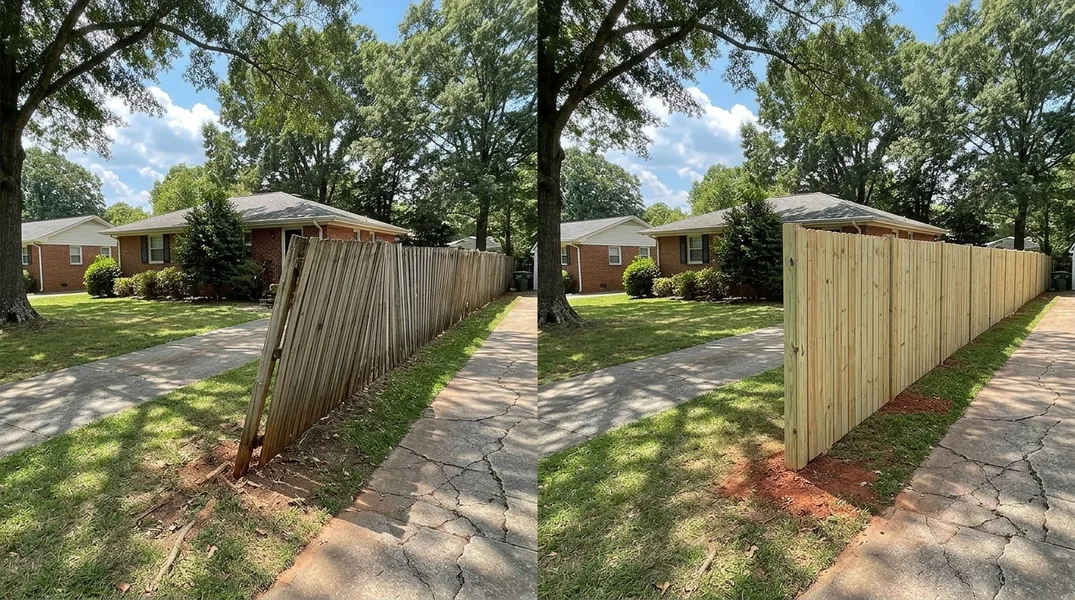
The Hidden Threat Beneath Your Feet: Red Clay vs. Frost Damage
Most homeowners assume that winter frost is the primary enemy of fence longevity. In reality, Charlotte's distinctive red clay soil presents a far more persistent and damaging challenge to fence posts and structural integrity. While frost heave occurs seasonally and predictably, red clay's expansive nature works year-round, silently shifting, compressing, and destabilizing your fence foundation.
Red clay is composed of fine mineral particles that absorb and retain moisture far more readily than sandy or loamy soils. When this clay becomes saturated during Charlotte's frequent spring rains or summer storms, it expands. As it dries, it contracts dramatically. This constant cycle of expansion and contraction creates lateral pressure against fence posts, loosening them in their holes and creating gaps where water can seep in. Over time, this movement weakens the structural bond between the post and concrete footing, leading to leaning, tilting, and eventual failure. Frost, by contrast, typically causes damage only during the winter months and in climates with more severe temperature swings than the Carolinas experience.
Why Wood & Privacy Fence Installation Demands Proper Foundation Techniques
When you invest in Wood & Privacy Fence Installation, the quality of your foundation determines whether your fence lasts 15 years or 5. In red clay regions like Charlotte, standard installation practices are simply not enough. Posts must be set deeper and in properly prepared holes with adequate drainage considerations. Professional contractors understand that a post hole dug in red clay requires special attention to prevent water pooling and clay compaction around the post base.
The concrete footing is critical. Many DIY installations use minimal concrete or fail to extend it below the frost line and into stable soil layers. In Charlotte's red clay environment, posts should be set at least 24 to 30 inches deep, with concrete extending well below the zone of seasonal moisture fluctuation. Additionally, proper drainage around the post is essential. Gravel or stone at the base of the post hole allows water to move away from the wood, reducing the clay's ability to expand and contract against the post. Charlotte Fence Contractors uses proven installation methods that account for local soil conditions, ensuring your wood fence remains stable for decades rather than succumbing to clay-induced settlement within a few years.
Do I Need a Permit for a Fence in Charlotte? Local Requirements Explained
One of the first questions homeowners ask is whether they need a permit before installing a fence. The answer in Charlotte is almost always yes. The City of Charlotte requires permits for most residential fence installations, and the permit process exists to ensure your fence complies with local codes, property lines, and utility locations. Failing to obtain a permit can result in fines, mandatory removal, or legal disputes with neighbors or the city.
The permit process typically involves submitting a site plan showing your property boundaries, the proposed fence location, height, and materials. The city reviews the application to confirm compliance with setback requirements (usually fences must be set back from property lines by a certain distance) and that the fence doesn't interfere with utilities or public right-of-way. While the process may seem bureaucratic, it protects you by confirming that your fence is legally positioned and won't encroach on neighboring properties. When you hire Charlotte Fence Contractors, we handle the permit process for you, ensuring all paperwork is filed correctly and your project moves forward without delays or complications.
Fence Height Regulations and HOA Approved Fence Standards in Charlotte
Charlotte's fence height regulations vary depending on your location and the type of fence you're installing. In most residential zones, front-yard fences are limited to 4 feet in height, while backyard fences can reach 6 feet. However, these are general guidelines, and specific neighborhoods, especially those governed by homeowner associations, may have stricter rules. If your property is part of an HOA, you'll likely need approval before installation begins, and your fence may need to meet specific aesthetic or material standards outlined in your HOA covenants.
An HOA approved fence is essential if you live in a deed-restricted community. Many HOAs in the Charlotte area require fences to match neighborhood character, specify approved colors and materials, or limit height further than city code allows. Before you commit to any fence design, review your HOA documentation or contact your HOA board directly. Charlotte Fence Contractors is familiar with HOA requirements across Charlotte, Matthews, and surrounding areas, and we can guide you toward designs and materials that satisfy both local code and community restrictions. This proactive approach prevents costly mistakes and ensures your fence project is approved from the start.
Wood & Privacy Fence Installation Cost in Charlotte: What to Budget
Understanding the pricing for Wood & Privacy Fence Installation helps you make an informed decision. In Charlotte, the cost of a wood privacy fence typically ranges from $25 to $40 per linear foot, depending on wood grade, height, and local labor rates. A 150-foot fence (a common residential perimeter) could cost between $3,750 and $6,000 installed. However, red clay soil conditions in Charlotte may increase costs slightly because proper foundation preparation and drainage management require additional time and materials compared to easier soil types.
Several factors influence your final cost. Premium wood species and thicker boards cost more than standard pressure-treated lumber. Terrain challenges, such as sloped yards or rocky soil, can increase labor costs. Permit fees, which vary by property size and fence length, typically range from $50 to $200 in Charlotte. If your project requires site preparation, tree removal, or utility locating, those services add to the total. The best way to understand your specific pricing is to request a free estimate from Charlotte Fence Contractors. We'll assess your soil conditions, property layout, and design preferences to provide an accurate quote that reflects the realities of installing a durable fence in Charlotte's red clay environment.
Protecting Your Investment: Maintenance Tips for Charlotte's Climate
Once your Wood & Privacy Fence Installation is complete, regular maintenance is essential to combat the effects of red clay and humid Carolina weather. Wood fences in Charlotte should be sealed or stained every 2 to 3 years to protect against moisture penetration, which accelerates rot and decay. The humid summers and occasional freeze-thaw cycles mean that any crack or gap in the wood's protective coating allows water to enter, where it expands and contracts with the clay below, accelerating post failure.
Beyond sealing, inspect your fence posts regularly for signs of movement or leaning. If you notice a post tilting or shifting, address it promptly before the problem spreads to adjacent sections. Monitor the soil around your posts after heavy rains; if water pools and doesn't drain within a few hours, poor drainage may be accelerating clay expansion. These maintenance habits, combined with the proper installation techniques that account for Charlotte's unique soil conditions, will maximize the lifespan of your fence and protect your investment for years to come. If you're ready to install a fence built to withstand Charlotte's red clay challenges, contact Charlotte Fence Contractors at (980) 208-1290 or request a free estimate today.
Looking for a professional tree service in Charlotte? Charlotte Fence Contractors responds fast for all your fence needs.
Get a Free Quote